
“One day the wife of a man from the guild of prophets called out to Elisha, “Your servant my husband is dead. You well know what a good man he was, devoted to God. And now the man to whom he was in debt is on his way to collect by taking my two children as slaves.”
2 Elisha said, “I wonder how I can be of help. Tell me, what do you have in your house?”
“Nothing,” she said. “Well, I do have a little oil.”
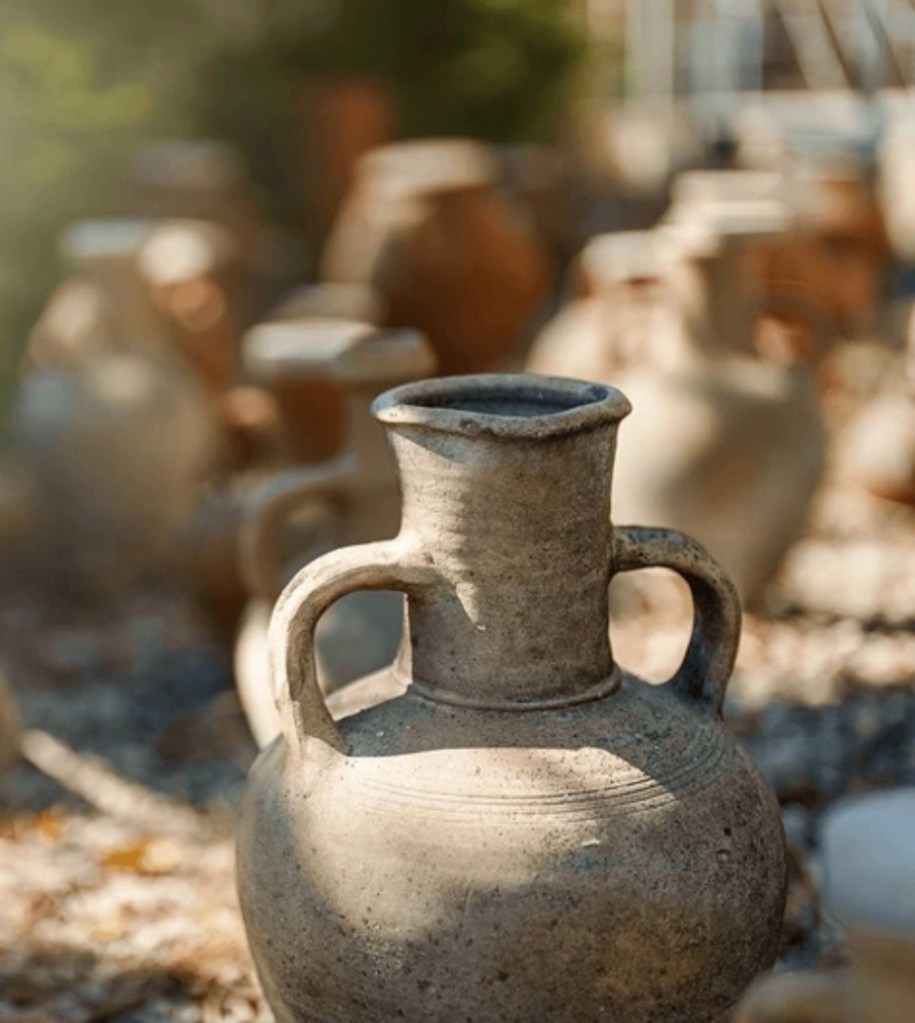
3-4 “Here’s what you do,” said Elisha. “Go up and down the street and borrow jugs and bowls from all your neighbors. And not just a few—all you can get. Then come home and lock the door behind you, you and your sons. Pour oil into each container; when each is full, set it aside.”
5-6 She did what he said. She locked the door behind her and her sons; as they brought the containers to her, she filled them. When all the jugs and bowls were full, she said to one of her sons, “Another jug, please.”
He said, “That’s it. There are no more jugs.”
Then the oil stopped.
7 She went and told the story to the man of God. He said, ‘Go sell the oil and make good on your debts. Live, both you and your sons, on what’s left.’” 2 Kings 4:1-7 The Message.
When I was a young girl, my brother and I would carefully save glass soda bottles. We collected them until we had enough to turn in at the local store. Each bottle would bring anywhere from 2 to 5 cents, and the store would pay us for them. This became a small way for us to earn some money, and we always looked forward to seeing how much we could get.
Today, it is common to witness people walking along the road searching for aluminum cans. Like the glass bottles from years ago, these cans can also be redeemed for cash. Many people gather them and turn them in for money, continuing the tradition of finding value in everyday items that might otherwise be discarded.
Have you ever heard the saying, “One man’s trash is another man’s treasure?” This simple phrase holds a profound truth. Often, we overlook the blessings around us because we are focused on our struggles and limitations. When difficulties arise, it’s easy to become discouraged. We may find ourselves anxiously reviewing our bank accounts, convinced there is no possible way to make it through to the end of the month. Bad news from a doctor can feel like the end of hope, making us believe that the diagnosis is the final word. On top of that, we might become trapped by negative thoughts or lies that tell us we will never break free from addiction or the challenges that bind us.
Yet, just as others can see value in things we might throw away, we can find unexpected hope and resources even in the most difficult circumstances. It is important to remember that our struggles do not define us, nor do they determine our future. Just like the widow who called out to Elisha, shifting our focus to faith in God may reveal blessings and solutions we never imagined possible.
Once the widow committed to following Elisha’s instructions, everything changed for her. At first, she was in a place of deep desperation, facing debts she could not pay and fearing for her family’s future. Yet, when she faithfully offered the small amount of olive oil she had, trusting God with what little she possessed, her situation was transformed. Through her faith and obedience, God began to provide for her in miraculous ways. Her needs were met in ways she could never have imagined, showing that even the smallest act of faith can lead to incredible blessings.
Great blessings often start with small acts of surrender and humility. When we take that first step, even if it seems insignificant, we begin a process that can lead to extraordinary outcomes. Sometimes, we overlook these humble beginnings, thinking they are too minor to make a difference. However, Scripture reminds us, “Do not despise these small beginnings for the Lord rejoices to see the work begin.” (Zechariah 4:10) This verse encourages us to value and appreciate each small effort, knowing that God takes delight when we start the journey, no matter how modest it may seem.
God did not simply provide money to solve the widow’s debt problem. Instead, He offered her and her sons the chance to actively participate in resolving their crisis. This required them to gather empty jugs from all their neighbors, a task that may have felt embarrassing or humbling. Nevertheless, following these instructions was essential. Faith is not just about hoping for change—it means placing trust in God and responding with obedience to His guidance. By doing so, the widow and her sons demonstrated their willingness to follow God’s word, showing that true faith often requires action as well as belief.
“Bring joy to your servant, Lord, for I put trust in you.” Psalms 86:4 LAB


Leave a Reply